Brewery Review Marketing: How to Turn Guest Feedback into Local Search Fuel

Share the page:
TLDR: Google reviews are the second-highest local search ranking factor for brewery operators, and in 2026 they are also a primary data source for AI-generated recommendations from ChatGPT, Perplexity, and Google AI Overviews. Taproom breweries and brewpubs that treat review management as a structured marketing program consistently generate more reviews, outperform competitors in local pack placement, and appear more frequently in AI-generated brewery summaries. This article covers which platforms matter most, how to generate reviews at scale within Google guidelines, how to respond strategically, and how review content feeds directly into AI search visibility.
Reviews Are No Longer Just a Trust Signal
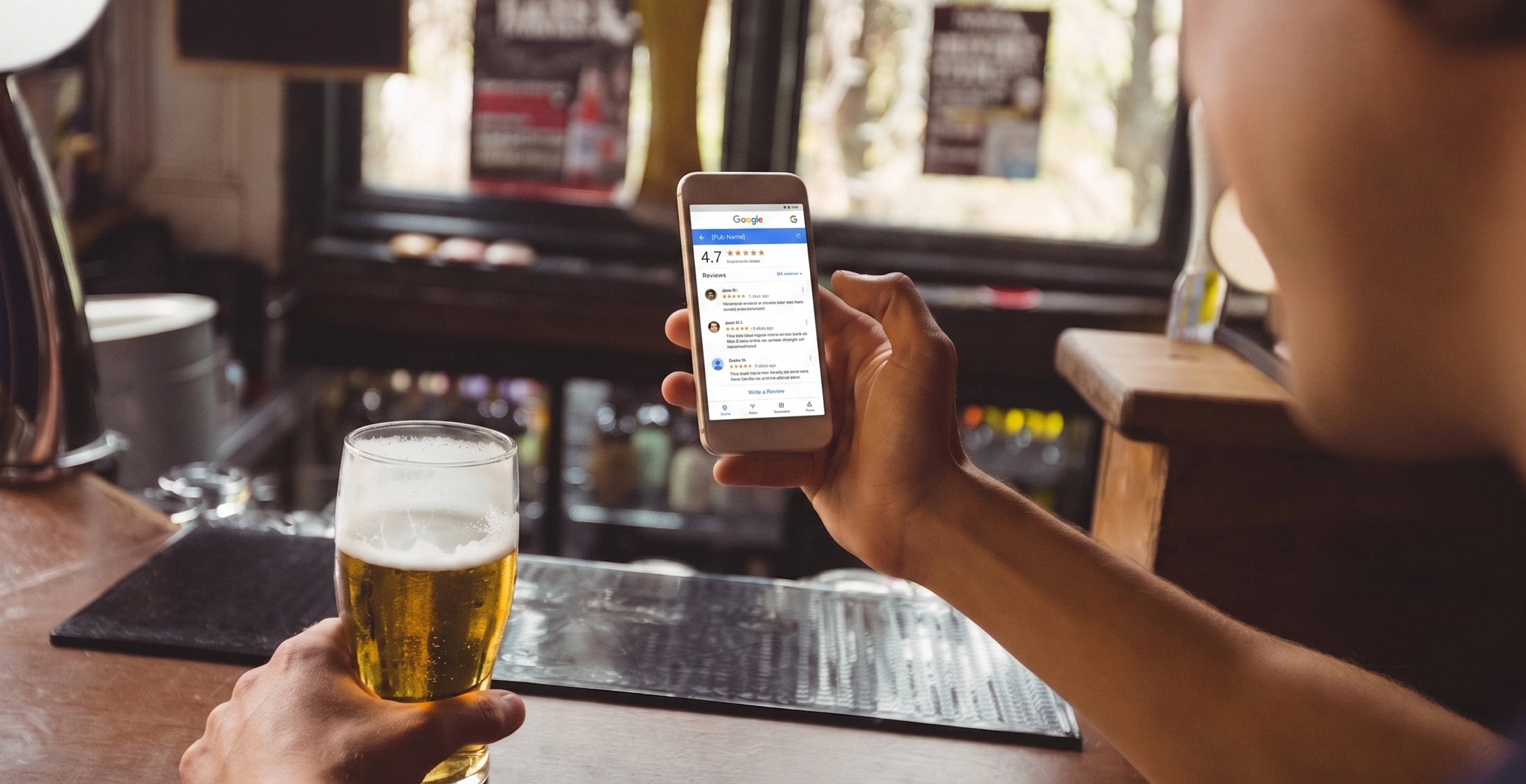
For most of the last decade, brewery operators thought of Google reviews as a reputation management tool: something to monitor and hope accumulated organically. That approach is no longer sufficient. In 2026, reviews are a direct local search ranking signal, a conversion driver on Google Maps, and a primary content source for AI-generated brewery recommendations.
When ChatGPT or Google AI Overviews answer a query about the best taproom in a given city, they draw on review volume, recency, rating, and review text to construct their responses. A brewery with 300 detailed reviews mentioning specific experiences, including trivia nights, dog-friendly patios, and rotating IPA selections, will appear in those summaries more frequently and more accurately than one with 40 generic five-star ratings. Review content is entity data, and AI engines are extracting it actively.
Why Do Reviews Matter So Much for Brewery Local Search Rankings in 2026?
According to Moz's 2025 Local Search Ranking Factors survey, review signals including volume, velocity, rating average, and response rate account for approximately 17 percent of local pack ranking weight. Only Google Business Profile signals carry more individual weight. For taproom breweries that generate the majority of their revenue from on-site visits, local pack placement is directly tied to foot traffic and weekly revenue.
The consolidation data reinforces the stakes. In 2024, more US craft breweries closed than opened for the first time since 2005, with 501 closures against 434 openings. Every closure redirects that brewery's former customers back to Google to find an alternative. The brewery appearing in the local pack with 200 or more reviews and a 4.5-star average captures that redirected demand. The one with 40 reviews and a 3.9 average does not.
Key Takeaway: Review volume and recency work together. A brewery that receives 20 reviews per month consistently outperforms one that received 200 reviews two years ago and has since collected nothing new.
Which Review Platforms Should Breweries Prioritize?
Not all review platforms carry equal weight for brewery local search and AI visibility. Google reviews are the most important platform for local pack rankings. Yelp reviews feed into Bing-based AI platforms including Microsoft Copilot, making them a secondary priority. Untappd occupies a unique position because it functions as both a review tool and a discovery engine specifically for craft beer enthusiasts, and its data feeds into AI summaries about beer selection and brewery reputation.
TripAdvisor is a priority for taproom breweries that attract significant tourist traffic because TripAdvisor data feeds into AI-generated travel recommendations. The table below ranks platforms by their relative impact on brewery discovery, foot traffic, and AI citation frequency.
Key Takeaway: If resources allow active management of only two review platforms, choose Google for local search rankings and Untappd for the craft beer enthusiast audience. These two together cover the majority of brewery-relevant review traffic in 2026.
How Should Breweries Generate Reviews Systematically Without Violating Guidelines?
Review generation requires a structured approach rather than occasional requests. The key principle is asking at the moment of highest satisfaction, which for taprooms typically occurs at checkout, immediately after an event, or when a customer gives a verbal compliment. Google's guidelines prohibit incentivizing reviews with discounts or free products, but they do not prohibit asking directly, providing QR code links, training staff to request reviews, or sending post-visit emails with review links.
The tactics below are fully compliant with platform guidelines and consistently generate three to five times more reviews than passive approaches. The most important implementation detail is removing friction: a QR code that opens the Google review form directly converts at a much higher rate than asking customers to search for the business name themselves.
Key Takeaway: Staff verbal requests at the point of checkout are the single highest-converting review generation tactic for taproom breweries. Training every front-of-house team member to ask takes less than 15 minutes and produces immediate results.
How Does Review Text Quality Affect AI Search Visibility?
AI search engines including ChatGPT, Perplexity, and Google AI Overviews extract information from review text to characterize a brewery's experience, beer selection, atmosphere, and suitability for different visitor types. Reviews that mention specific attributes become entity signals that AI engines use when answering descriptive queries about breweries in a given market.
Operators can influence review text quality without writing reviews for customers. Training staff to ask specific questions at checkout produces more detailed, attribute-rich reviews. Post-visit email review requests that reference the specific event or experience a customer attended produce the same effect. The table below maps the review text attributes that most strongly influence AI search citations, with examples of the phrases AI engines extract and use.
Key Takeaway: Reviews mentioning family-friendly atmosphere, specific beer styles, event types, and neighbourhood context are the most valuable for AI search visibility. Generic five-star ratings with no accompanying text contribute nothing to AI citation quality.
Frequently Asked Questions
How many Google reviews does a brewery need to rank in the local pack?
There is no fixed threshold, but BrightLocal's 2025 data shows that businesses with 50 or more reviews appear in the local pack three times more frequently than those with fewer than 10. For competitive brewery markets in mid-size and major cities, a practical target is 100 or more reviews with a 4.3-star average. Review velocity, meaning how recently reviews were received, matters as much as total count in Google's local ranking algorithm.
Should I respond to every Google review for my brewery?
Yes. Response rate is both a local ranking signal and a conversion signal. BrightLocal data shows that 89 percent of consumers read business responses to reviews. Your response text is indexed by Google and read by AI engines, which means thoughtful, specific responses reinforce the entity signals that determine AI search visibility. Responding to every review, including negative ones, is one of the highest-ROI 15-minute activities in brewery digital marketing.
Can I ask customers to mention specific things in their reviews?
You can ask customers about specific experiences without directing their review content. Asking "What did you think of the trivia night?" is compliant. Telling a customer what to write or offering incentives for positive reviews violates platform guidelines and risks profile suspension. The distinction matters: guiding a conversation toward a specific experience is compliant, while scripting a review is a guideline violation.
Does Untappd affect Google local search rankings?
Untappd check-ins and reviews do not directly factor into Google's local search algorithm. However, Untappd data feeds into AI search platforms that reference craft beer databases, and high check-in volume is a strong entity signal that reinforces your brewery's reputation with AI engines evaluating craft beer queries. For craft beer enthusiast audiences, a key brewery customer segment, Untappd visibility is as strategically important as Google visibility.
Conclusion: Every Review Is a Marketing Asset
In 2026, a brewery's review portfolio is one of its most durable and compounding digital assets. It outlasts paid campaigns, it builds trust faster than branded content, and it is increasingly critical for AI search visibility that no advertising budget can replicate. Taproom breweries and brewpubs that build systematic review generation programs, respond to every rating, and create conditions for detailed, attribute-rich review text will hold local search advantages that strengthen over time.
Ready to build a review strategy that drives local search rankings and AI citations? Explore our SEO & AI Optimization and Local Search Marketing services to build a program that converts every guest experience into lasting digital visibility.
Sources
Moz, Local Search Ranking Factors Survey (2025)
BrightLocal, Local Consumer Review Survey (2025)
BrightLocal, Google Business Profile Statistics (2025)
Brewers Association, 2024 Industry Production Report
Exposure Ninja, AI Search Statistics for 2026 (Jan 2026)
Whitespark, Local Search Ranking Factors (2024)
Google, Prohibited and Restricted Content Review Policy
Semrush, AI SEO Statistics (Nov 2025)
Stay Ahead - Subscribe Now!
You may also be interested
Is Your Brewery Website Invisible to ChatGPT? Signs It's Not AI-Ready
A retrieval-first diagnostic: which OpenAI bot you are blocking, whether your CDN decided it for you, and which of the usual AI-readiness warnings actually hold up.
Can a Brewery Deliver or Ship Beer? What the Rules Allow
Delivery and shipping are different things and the law treats them differently. Where a brewery may ship, what a compliant shipment requires, why the post office is never the answer, and what the nine-province Canadian agreement does and does not do yet.
How to Rank a Brewery on Google Maps
Google names three factors behind every map pack result. Two of them a brewery can move, one it never can, and the highest-leverage setting on the whole profile takes about two minutes to change.

Google Ads for Breweries: When Paid Search Beats Paid Social
A practical guide to paid search for taproom breweries: real category benchmarks, the alcohol policy rules that decide which campaign types you can run, and the intent split that tells you when to spend on Google instead of Meta.

Beer Can Design That Sells: Shelf Impact for Craft Packaging
What a can is really competing against, the one thing that should stay constant across a range, how the decoration method sets your minimum order, and what to hand a designer
What Actually Breaks on a Brewery Website, and What Maintenance Covers
The honest inventory of what decays on a brewery website, why plugins carry the risk on WordPress, what breaks on hosted builders instead, what a plan costs, and what you can do yourself
Brewery Website Migration: How to Move Platforms Without Losing Your Rankings
When a brewery actually needs to change platforms, what a migration genuinely puts at risk, the URL map that has to exist before anything moves, and the checks that close it out
Brewery Email Marketing: The Four Sends That Earn Their Keep
Why the newsletter is the weakest thing you can do with a brewery list, the four sends that replace it, where the names actually come from, and the two numbers worth reporting
Should Your Taproom Run a Chatbot?
What a taproom chatbot would actually be asked, what the 2026 data says about how chatbots perform, why the tap list is the worst thing to put in one, the narrow cases where it does pay, and what to fix instead
Beer Photography for Small Breweries: What to Shoot and When
What a small brewery actually needs photographs of, why a beer shot takes longer than it looks, what a half-day and a full day cost and deliver, which images have a window that closes, and how to write a brief
What a Brewery Website Costs, and What Drives the Number
Why quotes for the same brewery website vary by three times, what makes a taproom site structurally different from a brochure site, which decisions actually move the price, what you pay after launch, and how to compare quotes fairly

Choosing a Taproom POS: What to Ask Before You Sign
What a brewery POS has to do that a restaurant POS does not, why the processing rate matters more than the subscription, what is actually in the contract, who owns your data when you leave, and the questions to ask before signing
Which Taproom Workflows to Automate First
Which taproom workflows actually repeat often enough to justify automating, why federal compliance reporting is the highest-value target, what to connect after that, what to leave alone, and the order to do it in

Beer Label Design: What the Regulator Requires Before the Designer Starts
What the TTB requires on every beer label, how long approval actually takes in 2026, which rules constrain the artwork itself, what really delays a launch, and the brief a designer needs before starting
How to Start a Brewery: The Digital Foundations to Get Right First
What the federal and state approval timeline actually looks like in 2026, why your brewery name is a digital decision before it is a branding one, what to build during the approval window, and what has to be live before your first pour

The Three-Tier System, Explained for Brewery Marketers
Why the three-tier system exists, which marketing activities it forbids outright, exactly what a brewery may legally give a retailer and up to what value, why beer is treated differently from wine and spirits, and which channel you fully control
What Is a Mug Club? How Taprooms Build Recurring Revenue from Members
What a mug club is, how it differs from a points program, what the membership fee actually buys a taproom, the liquor-law rules that decide how you structure it, and how to publish the club so it can be found

ABV, IBU and SRM Explained: The Numbers on Your Tap List
What ABV, IBU and SRM actually measure, why the IBU number misleads drinkers, what the TTB requires you to print, and how to publish the specs so search engines and AI assistants can read them

Craft Beer Consumer Behavior in 2026: What the Data Means for Your Marketing Budget
How the major craft beer consumer behavior shifts of 2024 to 2026 translate into practical marketing budget decisions for taproom breweries, brewpubs, and microbreweries
Brewery Tourism Marketing: How to Attract Out-of-Town Visitors and Drive Weekend Traffic
How taproom breweries can attract out-of-town visitors, rank in tourism discovery platforms, and build the partnerships that drive consistent weekend traffic from the tourist segment in 2026
Brewery Loyalty Programs: Do Points and Perks Actually Drive Repeat Visits?
An evidence-based guide to brewery loyalty program mechanics, platform options, and ROI measurement for taproom operators considering whether and how to launch a customer loyalty program in 2026
Brewery Events as a Revenue Engine: How to Promote, Price, and Measure
How taproom breweries and brewpubs can promote, price, and measure events as a primary revenue engine rather than a secondary marketing activity in 2026
Brewery Merchandise and Secondary Revenue: How to Market Beyond the Pint
How taproom breweries and brewpubs can market merchandise, crowler programs, and beer club memberships as both a revenue diversification tool and a customer loyalty driver in 2026
12 Things Killing Your Local Search Rankings Right Now
A 12-point self-audit guide for brewery operators to identify and fix the website issues most commonly responsible for poor local search rankings and limited AI search visibility in 2026

Marketing Non-Alcoholic Beer: How Craft Breweries Can Capture the Sober Curious Consumer
How craft breweries can market non-alcoholic beer lines to sober-curious consumers, health-conscious drinkers, and younger demographics to capture the fastest-growing segment in the craft beer market in 2026
.webp)
Brewpub Marketing Strategy: How to Fill Both the Bar and the Dining Room
How brewpubs can use digital marketing to fill both the dining room and the bar by marketing the food and beer experience as a unified destination rather than two separate offerings
Microbrewery Marketing in a Shrinking Distribution Market: What to Do When Shelf Space Disappears
How microbreweries facing shrinking distributor interest and tightening shelf space can use digital marketing to differentiate their brand and pivot toward direct-to-consumer channels in 2026

Brewery Social Media Strategy for 2026: Instagram, Facebook, and When to Bother with TikTok
A platform-by-platform social media strategy for taproom breweries and brewpubs in 2026, covering Instagram, Facebook, and TikTok with content mix ratios and posting cadence

Brewery Content Marketing in 2026: What to Publish, When, and Why It Works
What to publish, when to publish it, and why a structured content marketing program is the highest-ROI long-term investment available to brewery operators in 2026
Meta Ads for Breweries: A Geo-Targeted Playbook for Taprooms and Brewpubs
A geo-targeted Meta advertising playbook for taproom breweries and brewpubs covering campaign structure, audience targeting, ad formats, and budget guidance for 2026

Multi-Location Brewery SEO: How Regional Craft Breweries Rank in Every Market
How regional craft breweries operating multiple taprooms can build an SEO architecture that ranks independently in every local market without cannibalizing results.
Google Business Profile for Breweries: The Complete 2026 Optimization Guide
How to set up, optimize, and maintain your brewery's Google Business Profile to dominate local search and drive foot traffic in 2026.

How to Make Your Brewery Visible in AI Search: A GEO Guide for Craft Breweries
How craft breweries can use Generative Engine Optimization (GEO) to stay visible in AI-powered search results in 2026