Brewery Website Migration: How to Move Platforms Without Losing Your Rankings


Share the page:
Changing platforms is not what costs a brewery its rankings. Losing its URLs is. Google keeps old addresses in its index for a long time and asks that redirects stay up for "at least 1 year", so a move survives or fails on whether every old address points at the right new one. That work happens before launch, not after. Be sceptical of the traffic-loss percentages circulating on this topic: most come from companies that sell migrations, and one widely-syndicated 2026 study produced its numbers by asking four AI chatbots what they thought. The mechanics are documented by Google, and they are not complicated. They are just easy to skip.
Introduction: The Move Is Not the Risky Part. The URLs Are.
A brewery moves from Squarespace to Webflow over a quiet weekend in February. Monday morning the site is faster, the tap list finally updates itself, and everyone is pleased. Six weeks later the page that used to come up when people searched the town plus "brewery" is not coming up at all.
Nothing broke. The taproom page still exists, still looks good, still says the same things. Its address changed from /taproom to /visit, the old address returns a 404, and nothing ever told Google the two were the same page. Every link any beer blog or tourism board ever pointed at /taproom now points at nothing.
This is the failure mode, and it has almost nothing to do with which platform you chose. Migrations that go badly go badly in the URL map. That is a boring, checkable artifact that someone has to build before launch day, and it is the first thing dropped when a project runs late.
BeerSoft sees the aftermath more often than the plan: a brewery arrives having already moved, wondering why traffic halved, and the answer is usually sitting in a spreadsheet nobody made.
Here is what actually needs to happen, in the order it needs to happen.
When Does a Brewery Actually Need to Move Platforms?
When the platform is blocking something you need to do, not when the site looks dated. A redesign and a migration are different projects, and conflating them is how breweries end up paying for a migration they did not need.
Worth knowing what the landscape looks like before you assume you are on the wrong thing. W3Techs, surveying on 22 September 2026, puts WordPress at 40.2% of all websites and 58.8% of sites using a CMS. Shopify holds 5.4% of all sites, Wix 4.2%, Squarespace 2.4% and Webflow 0.8%. Squarespace and Wix are small in share terms and extremely common among small hospitality businesses, which is the pool most brewery sites come from.
The honest test is whether you can name the thing you cannot currently do. "I want a beer page per beer, generated from one list, that updates the tap board too" is a reason to move. "It feels old" is a reason to redesign, which is cheaper and carries none of this risk. The piece on what a brewery website costs covers the ranges for both, and the gap between them is usually larger than people expect.
Key Takeaway: write down the one capability you are buying before you shortlist platforms. If you cannot name it in a sentence, you want a redesign, not a migration.
If you are weighing platforms rather than moving yet, our low-code and no-code work for breweries covers what each one costs you in flexibility later.
What Does a Migration Actually Put at Risk?
Your URLs. Almost everything else that feels risky is recoverable in an afternoon.
Google's own documentation is direct about what a move does to search visibility: "visibility of your content in Search may fluctuate temporarily during the move. This is normal and a site's rankings will settle down over time." On timing, "a small to medium-sized website can take a few weeks for most pages to move, and larger sites take longer". A brewery site is a small site. Weeks, not months, provided the addresses resolve.
It is worth being blunt about the numbers you will find elsewhere. Search for migration traffic loss and you will meet confident figures: 20 to 40 percent, nine in ten migrations damage SEO, six to twelve months to recover. Follow them back and they are almost always published by companies that sell migrations. One widely-syndicated 2026 study reached its 20 to 40 percent figure by analysing 4,000 AI chatbot answers about replatforming, which measures what language models say about migrations rather than what happens during them. None of that means migrations are safe. It means nobody has published a number worth quoting, and this article is not going to invent one.
That last row is the one that costs a taproom actual walk-ins, and it sits outside the website project entirely, which is why it gets missed.
Key Takeaway: the only irreversible part of a migration is a URL you cannot map to anything. Everything else is a support ticket.
What Has to Be Mapped Before Anything Moves?
Every address the old site answers on, paired with the address that replaces it. One row per URL. No exceptions, no "we'll catch the rest later".
Start by exporting the full list rather than listing what you remember. A brewery site has more pages than anyone thinks: every beer, every event that ever ran, the old jobs page, three versions of the contact page, and whatever the previous agency left behind. Pull them from your sitemap, from Search Console's page report, and from your analytics for the last twelve months, then combine and dedupe. Anything with a single visit in a year still needs a destination. This is the same instinct as asking whether a system can hand back its own data before you commit to it, which is the test applied to point of sale in the piece on choosing a taproom POS. A platform you cannot fully export from is a platform you cannot cleanly leave.
Four decisions cover everything: it moves, it stays, it merges into a parent, or it retires on purpose. The fourth is a real option and should be used. Redirecting a dead 2023 event page to the homepage is worse than letting it go, because it teaches Google nothing and gives a visitor a page that does not answer why they clicked.
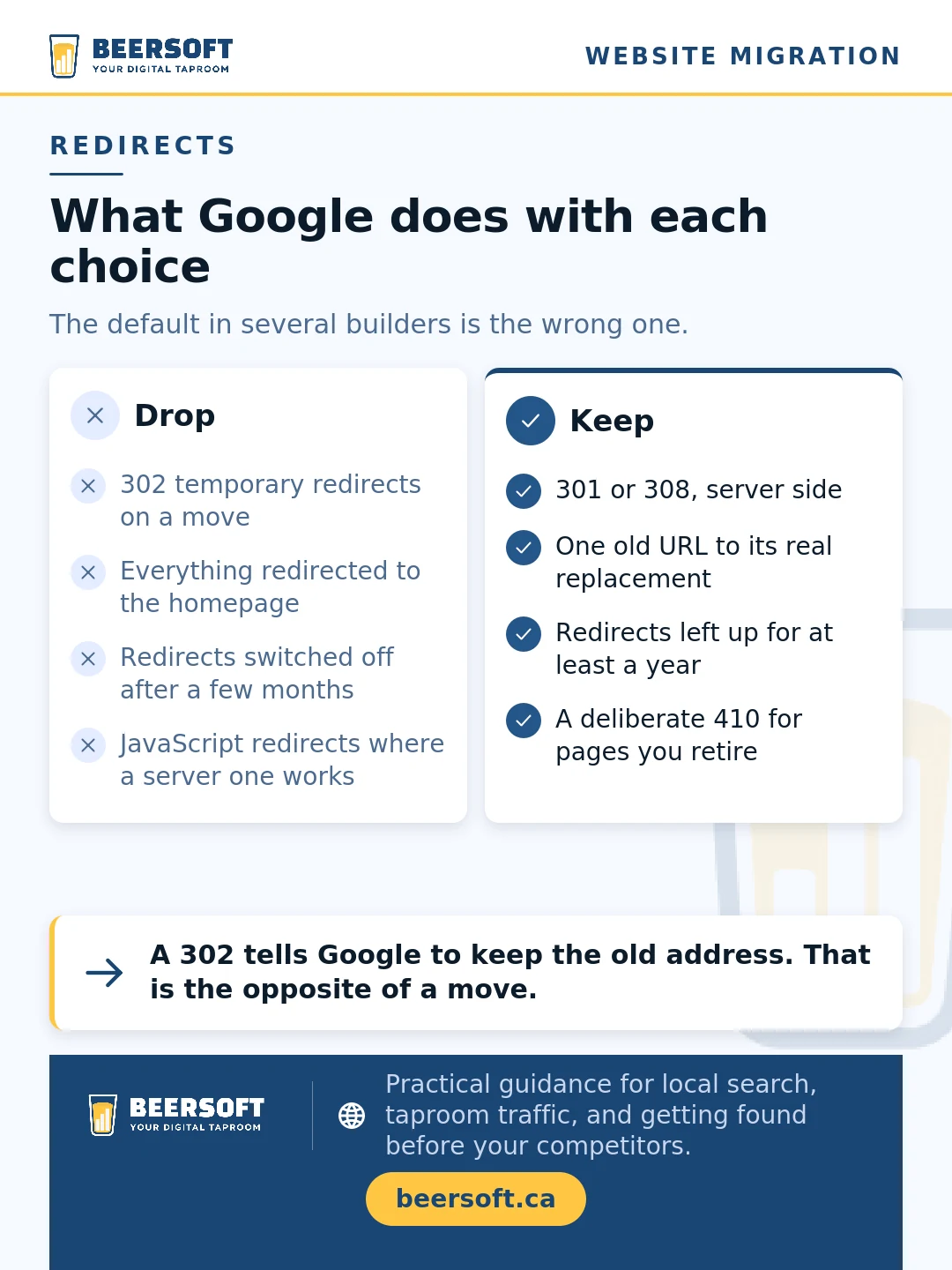
The redirects themselves need to be permanent. Google distinguishes clearly: a permanent redirect means "the indexing pipeline uses the redirect as a signal that the redirect target should be canonical", while with a temporary one "the indexing pipeline doesn't use the redirect as a signal". A temporary redirect tells Google to keep the old address. That is the opposite of what you want, and it is the default in several site builders. Server-side 301 or 308 is the right answer. Use JavaScript redirects only if nothing else is possible, because "rendering may fail for various reasons" and Google "might never see it".
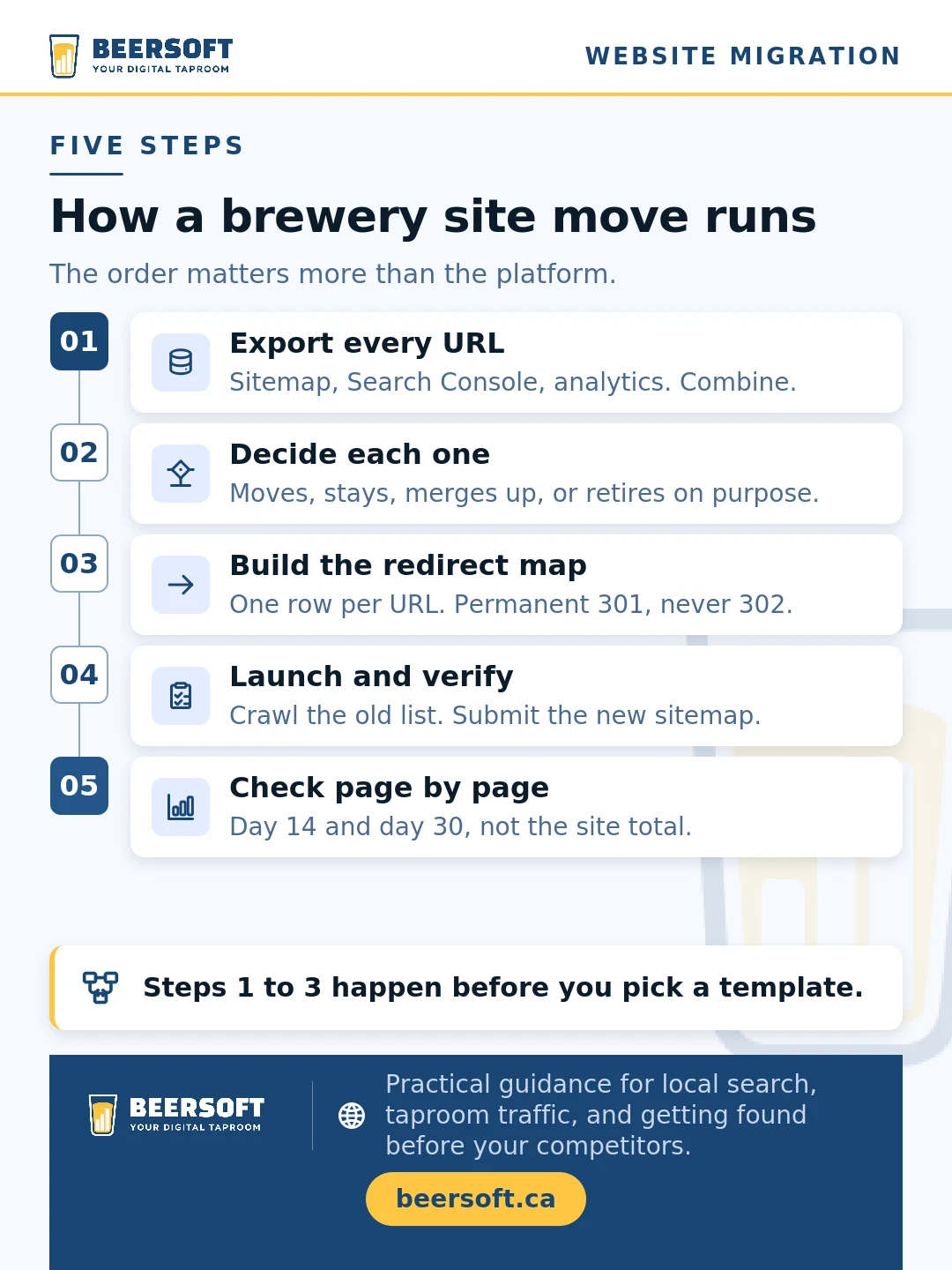
Key Takeaway: build the URL map before you choose a template. If the map does not exist two weeks before launch, move the launch, not the map.
What Happens on Launch Day and the Week After?
Less than people expect, if the map is done. The work on launch day is verification, not construction.
Google's guidance is short and worth following literally. Change the internal links on the new site "from the old URLs to the new URLs" rather than leaving them to bounce through redirects. Submit the new sitemap in Search Console, which "will help Google learn about the new URLs". Keep the redirects "for as long as possible, generally at least 1 year", which in practice means never turning them off, because the cost of leaving them up is zero.
One thing that trips up breweries specifically. The Change of Address tool in Search Console only applies when you move domains. It does not cover moving pages inside the same domain, http to https, or www to non-www. Most brewery migrations keep the domain and change the platform, so the tool is not part of the job at all. And where it does apply, the signal "last for 180 days after you start migration", so it is a handover period rather than a permanent setting.
Then the parts nobody assigns to anyone. Your Google Business Profile links to a specific page, and if that page moved, fix the link the same day. Your email footer, your Untappd listing, the tourism board entry, the brewery guild directory, the QR code on the table tents. Those are not redirects, they are typed addresses in other people's systems, and a redirect keeps them alive but slow. The list you email is the one to check first, because a broken link in the week's send reaches your most engaged people at exactly the wrong moment.
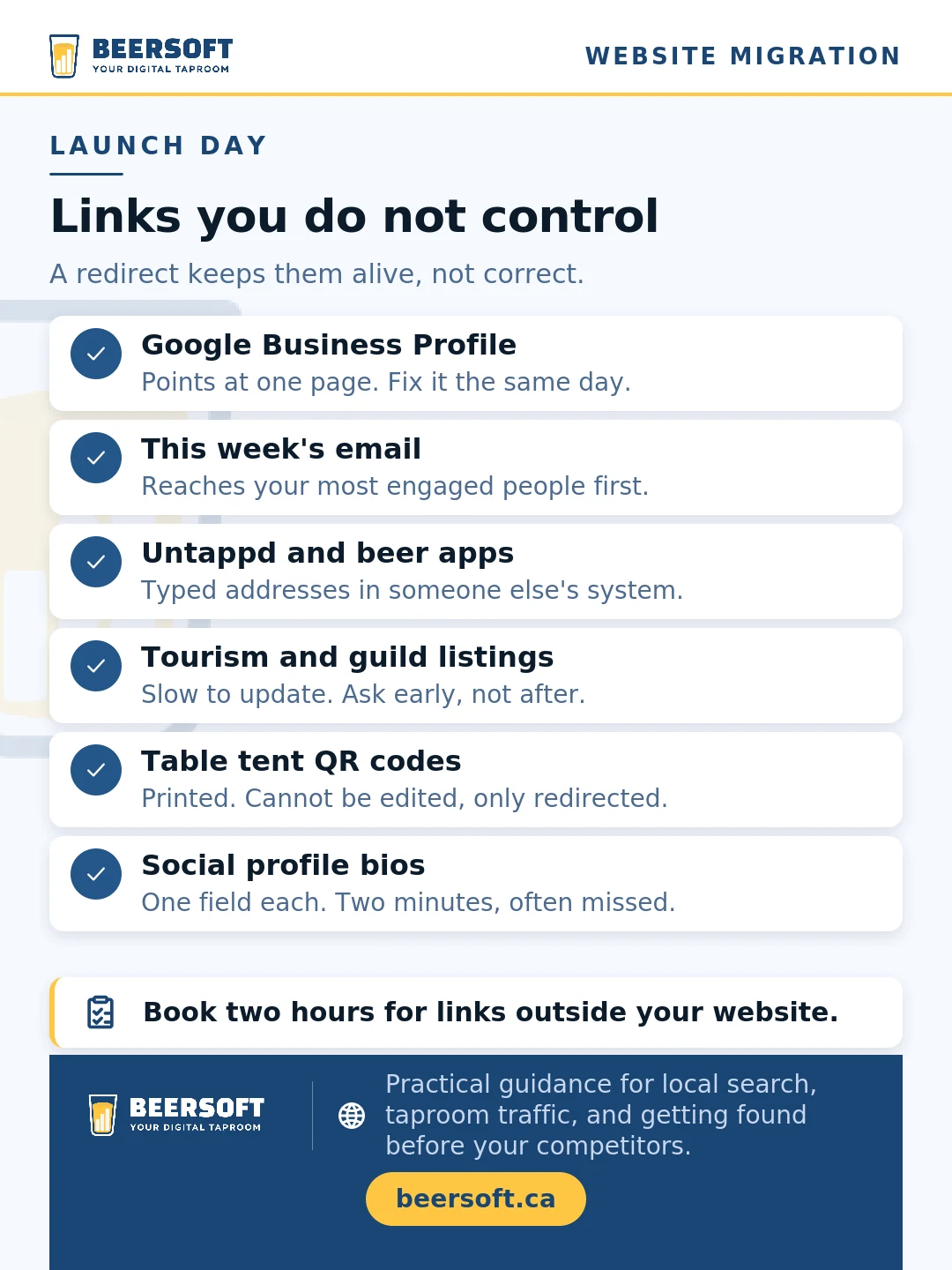
Key Takeaway: book two hours on launch day for links you do not control, and start with the Google Business Profile and this week's email.
What Should You Check Before You Call It Done?
That every old URL resolves, that Search Console is clean, and that the pages which earn money still earn it. Two weeks after launch, not two days.
The checks that matter are unglamorous and mostly free. The one BeerSoft runs first on any post-migration audit is the crawl, because it answers in ten minutes what analytics takes a month to hint at. Crawl the old URL list and confirm each one returns a 301 to a live page rather than a 404 or a chain of three hops. Watch Search Console coverage for a fortnight and expect the not-found count to spike and then fall. If it rises and stays, something in the map is wrong. Compare the pages that brought traffic before the move against the ones bringing it now, page by page, rather than looking only at the site total, because a total can hold steady while your best page quietly disappears.
A migration is finished when the old addresses all resolve, coverage is clean, and no page has silently lost its traffic. That is usually three or four weeks after launch, and it is a different date from the one in the project plan.
Key Takeaway: compare traffic page by page at day 14 and day 30. A steady site total is the most common way a lost page hides.
Frequently Asked Questions
How long does a website migration take to recover in Google?
Weeks for a small site, provided the redirects are right. Google says a small to medium-sized website "can take a few weeks for most pages to move", and that visibility "may fluctuate temporarily during the move. This is normal". A brewery site is small. If traffic has not settled after about a month, the problem is usually a mapping error rather than a waiting game, and it is worth crawling the old URL list again.
Do I need to keep redirects forever after moving my brewery website?
Effectively yes. Google's guidance is to keep them "for as long as possible, generally at least 1 year". In practice there is no cost to leaving them in place permanently, and there are links on beer blogs, tourism sites and printed material you will never find. Turning redirects off later is a decision with a downside and no upside.
Will changing platforms hurt my Google Business Profile?
Only through the link. The profile points at a specific page on your site, so if that page's address changed, the listing sends people to a redirect at best and a 404 at worst. Update the website field on launch day. The profile itself, your reviews and your photos are unaffected by anything happening on the website.
Should I redesign and migrate at the same time?
Usually not, and definitely not if the URL structure is changing too. Doing both at once means that when traffic moves you cannot tell whether the cause was the new addresses, the new content, or the new layout. If both have to happen, migrate first on the existing structure, confirm it is stable, then redesign.
What is the difference between a 301 and a 302 redirect for a site move?
A 301 is permanent and tells Google the new address is the one to index. A 302 is temporary, and Google states that with a temporary redirect "the indexing pipeline doesn't use the redirect as a signal that the redirect target should be canonical", so the old address stays. For a site move you want 301 or 308. Several site builders default to temporary redirects, so this is worth checking rather than assuming.
Conclusion: Map the URLs Before You Pick the Platform
The platform decision gets all the attention and carries almost none of the risk. The URL map carries all of it, costs nothing but an afternoon, and is the artifact that separates a move nobody notices from one that takes a quarter to recover from.
So build the map first. Export every address, make one of four decisions about each, and only then start looking at templates. If the map is not finished two weeks before launch, move the launch date.
If you would rather hand the whole thing over, BeerSoft does this work: website and application migration for breweries covers the audit, the URL mapping and the redirect strategy, plus the ecommerce and hosting sides when those move too. If you have already moved and traffic went somewhere you cannot explain, contact us and we will start with the crawl.
Sources
- Google Search Central. Site moves with URL changes. Redirect duration, permanent redirects, internal links, sitemap submission and expected timelines.
- Google Search Central. Redirects and Google Search. Permanent versus temporary redirect handling, meta refresh and JavaScript redirects.
- Google Search Console Help. Change of Address tool. Scope, requirements and the 180-day signal period.
- W3Techs. Usage statistics of content management systems. Survey of 22 September 2026.
- Brewers Association. National Beer Sales and Production Data. 2025 figures.
Stay Ahead - Subscribe Now!
You may also be interested

Brewery Email Marketing: The Four Sends That Earn Their Keep
Why the newsletter is the weakest thing you can do with a brewery list, the four sends that replace it, where the names actually come from, and the two numbers worth reporting

Should Your Taproom Run a Chatbot?
What a taproom chatbot would actually be asked, what the 2026 data says about how chatbots perform, why the tap list is the worst thing to put in one, the narrow cases where it does pay, and what to fix instead
Beer Photography for Small Breweries: What to Shoot and When
What a small brewery actually needs photographs of, why a beer shot takes longer than it looks, what a half-day and a full day cost and deliver, which images have a window that closes, and how to write a brief
What a Brewery Website Costs, and What Drives the Number
Why quotes for the same brewery website vary by three times, what makes a taproom site structurally different from a brochure site, which decisions actually move the price, what you pay after launch, and how to compare quotes fairly

Choosing a Taproom POS: What to Ask Before You Sign
What a brewery POS has to do that a restaurant POS does not, why the processing rate matters more than the subscription, what is actually in the contract, who owns your data when you leave, and the questions to ask before signing

Which Taproom Workflows to Automate First
Which taproom workflows actually repeat often enough to justify automating, why federal compliance reporting is the highest-value target, what to connect after that, what to leave alone, and the order to do it in

Beer Label Design: What the Regulator Requires Before the Designer Starts
What the TTB requires on every beer label, how long approval actually takes in 2026, which rules constrain the artwork itself, what really delays a launch, and the brief a designer needs before starting
How to Start a Brewery: The Digital Foundations to Get Right First
What the federal and state approval timeline actually looks like in 2026, why your brewery name is a digital decision before it is a branding one, what to build during the approval window, and what has to be live before your first pour

The Three-Tier System, Explained for Brewery Marketers
Why the three-tier system exists, which marketing activities it forbids outright, exactly what a brewery may legally give a retailer and up to what value, why beer is treated differently from wine and spirits, and which channel you fully control
What Is a Mug Club? How Taprooms Build Recurring Revenue from Members
What a mug club is, how it differs from a points program, what the membership fee actually buys a taproom, the liquor-law rules that decide how you structure it, and how to publish the club so it can be found

ABV, IBU and SRM Explained: The Numbers on Your Tap List
What ABV, IBU and SRM actually measure, why the IBU number misleads drinkers, what the TTB requires you to print, and how to publish the specs so search engines and AI assistants can read them

Craft Beer Consumer Behavior in 2026: What the Data Means for Your Marketing Budget
How the major craft beer consumer behavior shifts of 2024 to 2026 translate into practical marketing budget decisions for taproom breweries, brewpubs, and microbreweries

Brewery Tourism Marketing: How to Attract Out-of-Town Visitors and Drive Weekend Traffic
How taproom breweries can attract out-of-town visitors, rank in tourism discovery platforms, and build the partnerships that drive consistent weekend traffic from the tourist segment in 2026
Brewery Loyalty Programs: Do Points and Perks Actually Drive Repeat Visits?
An evidence-based guide to brewery loyalty program mechanics, platform options, and ROI measurement for taproom operators considering whether and how to launch a customer loyalty program in 2026

Brewery Events as a Revenue Engine: How to Promote, Price, and Measure
How taproom breweries and brewpubs can promote, price, and measure events as a primary revenue engine rather than a secondary marketing activity in 2026
Brewery Merchandise and Secondary Revenue: How to Market Beyond the Pint
How taproom breweries and brewpubs can market merchandise, crowler programs, and beer club memberships as both a revenue diversification tool and a customer loyalty driver in 2026
12 Things Killing Your Local Search Rankings Right Now
A 12-point self-audit guide for brewery operators to identify and fix the website issues most commonly responsible for poor local search rankings and limited AI search visibility in 2026

Marketing Non-Alcoholic Beer: How Craft Breweries Can Capture the Sober Curious Consumer
How craft breweries can market non-alcoholic beer lines to sober-curious consumers, health-conscious drinkers, and younger demographics to capture the fastest-growing segment in the craft beer market in 2026
.webp)
Brewpub Marketing Strategy: How to Fill Both the Bar and the Dining Room
How brewpubs can use digital marketing to fill both the dining room and the bar by marketing the food and beer experience as a unified destination rather than two separate offerings
Microbrewery Marketing in a Shrinking Distribution Market: What to Do When Shelf Space Disappears
How microbreweries facing shrinking distributor interest and tightening shelf space can use digital marketing to differentiate their brand and pivot toward direct-to-consumer channels in 2026

Brewery Social Media Strategy for 2026: Instagram, Facebook, and When to Bother with TikTok
A platform-by-platform social media strategy for taproom breweries and brewpubs in 2026, covering Instagram, Facebook, and TikTok with content mix ratios and posting cadence

Brewery Content Marketing in 2026: What to Publish, When, and Why It Works
What to publish, when to publish it, and why a structured content marketing program is the highest-ROI long-term investment available to brewery operators in 2026
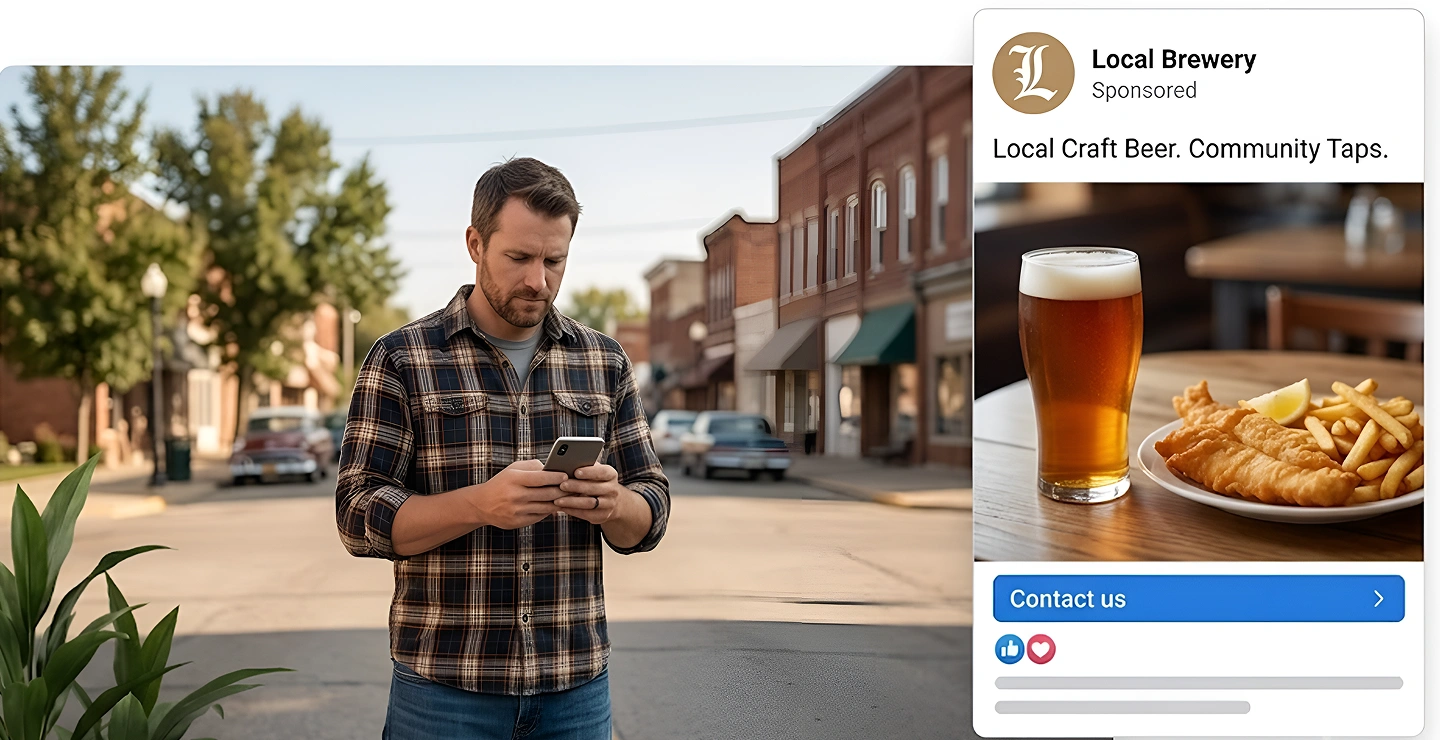
Meta Ads for Breweries: A Geo-Targeted Playbook for Taprooms and Brewpubs
A geo-targeted Meta advertising playbook for taproom breweries and brewpubs covering campaign structure, audience targeting, ad formats, and budget guidance for 2026

Multi-Location Brewery SEO: How Regional Craft Breweries Rank in Every Market
How regional craft breweries operating multiple taprooms can build an SEO architecture that ranks independently in every local market without cannibalizing results.
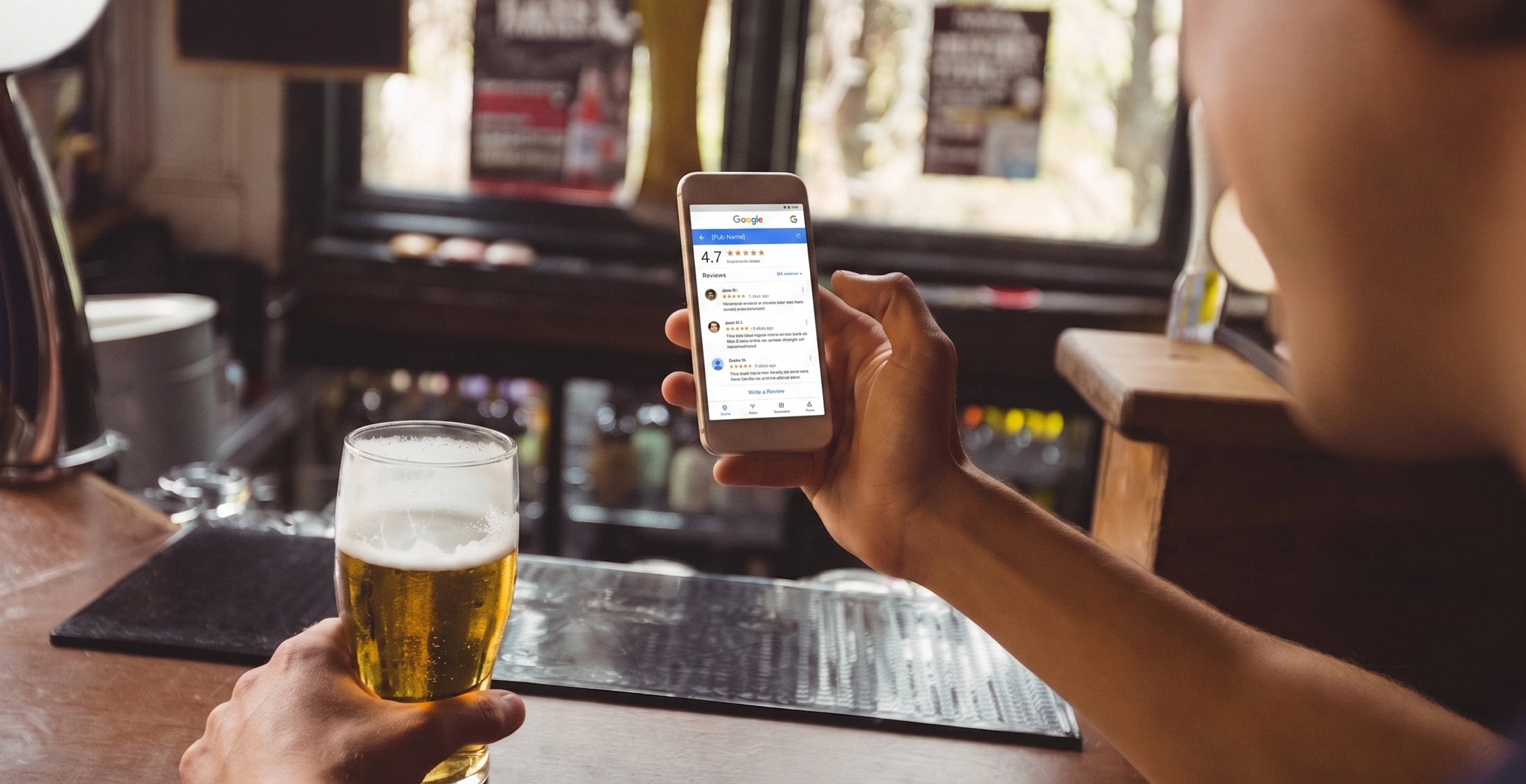
Brewery Review Marketing: How to Turn Guest Feedback into Local Search Fuel
Google reviews are the number two local ranking factor for breweries. Learn how to generate, respond to, and optimize reviews for local search and AI search visibility.

Google Business Profile for Breweries: The Complete 2026 Optimization Guide
How to set up, optimize, and maintain your brewery's Google Business Profile to dominate local search and drive foot traffic in 2026.

How to Make Your Brewery Visible in AI Search: A GEO Guide for Craft Breweries
How craft breweries can use Generative Engine Optimization (GEO) to stay visible in AI-powered search results in 2026